
Join us for wine tasting! Open daily 10am-5pm.
Want to save 20%? Join our Wine Club and start saving today. Learn More.
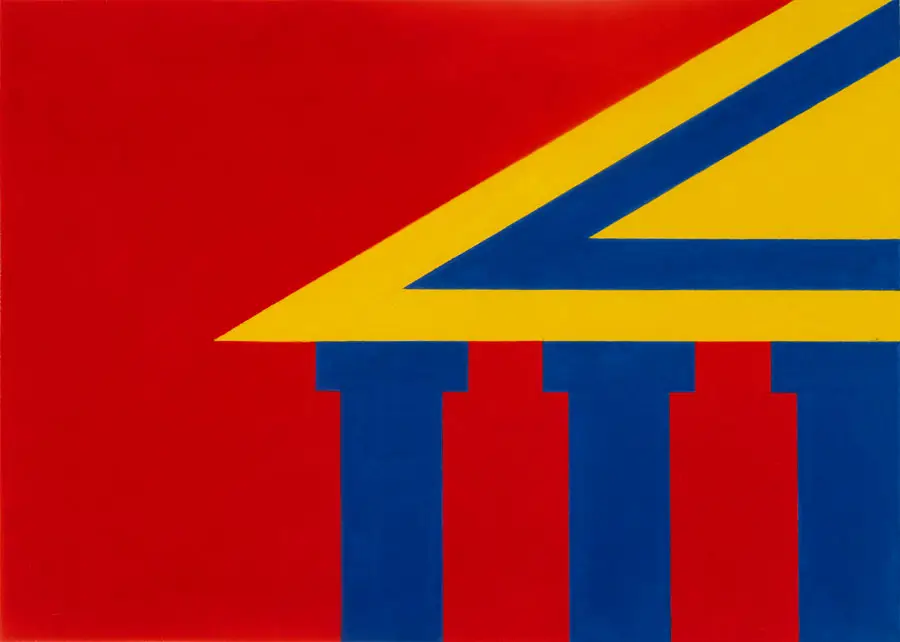
Inspired by the work of Sol LeWitt, Benziger Print explores the relationship between structure, pattern, and creative expression. Geometric forms, repeated elements, and carefully arranged lines create a sense of rhythm and movement across the composition, echoing the visual language that made LeWitt a leading figure in Conceptual Art and Minimalism. Rather than focusing solely on representation, the artwork emphasizes the power of systems, organization, and the beauty that emerges from simple forms working together.
At the same time, Benziger Print reflects the spirit of the Benziger brand, bringing together order and creativity in a contemporary visual statement. The interplay of color, shape, and repetition creates a dynamic composition that rewards close observation, revealing subtle relationships between its individual elements. The result is a work that feels both methodical and expressive, celebrating the balance between concept and artistry while paying homage to LeWitt’s belief that an idea can be the foundation of a work of art.
The creation of Benziger Print was guided by a structured, concept-driven approach inspired by the geometric principles and systematic methodologies associated with Sol LeWitt. Beginning with a framework of lines, shapes, and repeated forms, the composition evolved through careful experimentation with pattern, spacing, and visual rhythm. Rather than relying solely on spontaneous expression, the work was developed through a deliberate process in which design decisions were informed by an underlying system, allowing complexity and movement to emerge from simple elements.
Color, proportion, and repetition played a central role throughout the development of the piece, creating a dynamic balance between order and creativity. As layers were refined, attention was given to how individual shapes interacted across the composition, generating a sense of depth, harmony, and visual energy. The resulting print reflects both conceptual planning and artistic exploration, demonstrating how a clear idea can become a compelling visual experience while celebrating the relationship between structure, design, and expression. Sol LeWitt was renowned for emphasizing the importance of the idea or concept behind an artwork and for creating works based on systematic instructions and geometric forms.
Sol LeWitt (1928-2007) was an influential American artist widely regarded as a pioneer of both Conceptual Art and Minimalism. Rather than focusing solely on the finished artwork, LeWitt emphasized the importance of the underlying idea, believing that the concept itself could be the artwork. Throughout his career, he worked across a variety of media, including drawing, printmaking, sculpture, painting, and large-scale wall drawings that could be executed by others following his written instructions. Sol LeWitt became known for his use of geometric forms, systematic processes, repetition, and carefully structured compositions that challenged traditional notions of artistic authorship and creativity.
LeWitt’s innovative approach transformed contemporary art and continues to influence artists, designers, and architects around the world. His work demonstrates how simple shapes, patterns, and rules can generate visually dynamic and intellectually engaging results. By placing equal value on planning and execution, he expanded the definition of what art could be, creating a lasting legacy built on exploration, structure, and the power of ideas.